
Customer Reviews
-
★ ★ ★ ★ ★
I had a really great experience ordering from this store. The quality was excellent, delivery was on time, and everything felt smooth and well managed from start to finish.
Reviewed by: Sarah Khurram.
Reviewed on: March 5, 2026
-
★ ★ ★ ★ ★
Very satisfied with my order. The quality was very good, the payment process was easy, and the delivery service was quick and reliable. Overall, it was a really nice experience.
Reviewed by: Asim Ahad.
Reviewed on: March 2, 2026
-
★ ★ ★ ★ ★
Everything was excellent from ordering to delivery. The quality exceeded my expectations, payment was secure and simple, and the whole process was smooth and stress free.
Reviewed by: Eman Ijaz.
Reviewed on: February 25, 2026
-
★ ★ ★ ★ ★
I’m really happy with the overall service. The quality was impressive, delivery was handled properly, and the payment method was very convenient. It was a great experience for me.
Reviewed by: Alizeh Aslam.
Reviewed on: February 20, 2026
The Book Bank
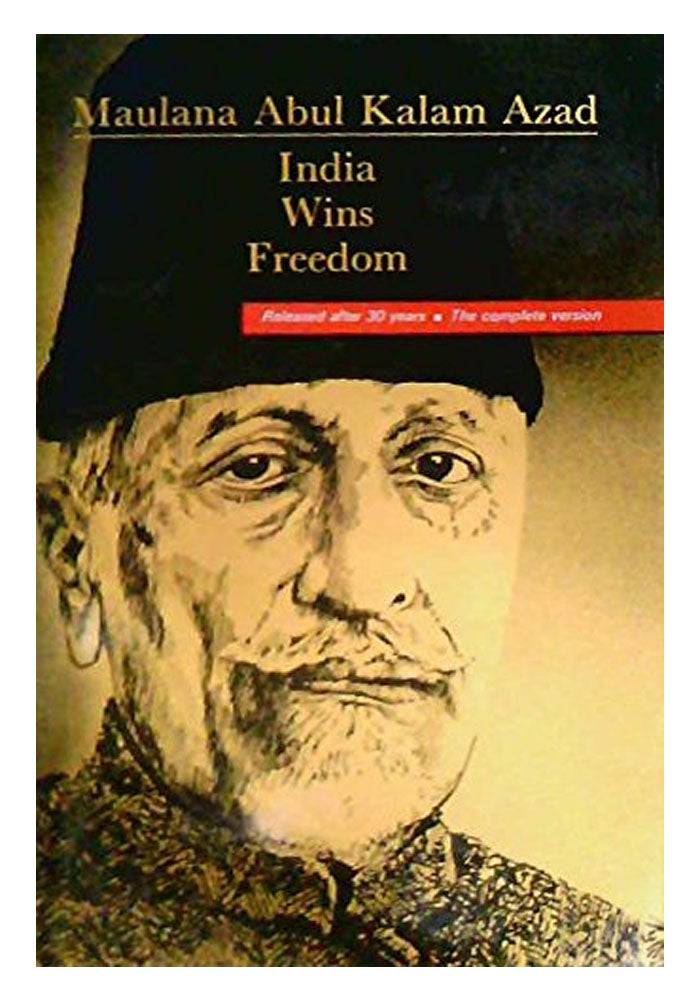
India Wins Freedom By Maulana Azad
Couldn't load pickup availability
A poignant narrative by Maulana Azad, India Wins Freedom is his take on the entire partition, his personal experiences, and his take on the concept of liberty and freedom.India Wins Freedom is an autobiographical narrative of the partition that occurred in 1947. It is marked by the direct, clear cut passages that narrate incidents that took place during the Indian Independence movement. Azad recounts, in his typically frank and forthright manner, the events that unfolded and ultimately led to the partition in a profound, yet deceptively simple manner. When India Wins Freedom was first published, it was sealed and confined at the National Library of Calcutta, with a copy placed at the National Archives in Delhi, for thirty years. In 1988, a court directive released the text, and made it accessible to the general public. The controversial and unique take on the entire freedom movement led to over thirty million copies of the book being sold worldwide. Azad discusses about how politics, more than religion, was responsible for the partition, and how India gained freedom but failed to utilize it to its maximum advantage. He writes about the predominant hypocrisy in the field of politics, and also mentions fellow contemporaries of his time like Gandhi, Nehru, and Subhash Chandra Bose and their mindsets during the entire movement.
Share